

Simple ways to weave instrumental music into your family's day
By Eleonor Bindman
Something happens when the right piece of music begins to play. The energy is palpable: it can soothe, excite, speed up, or slow down, depending on the context. I have seen it in concert halls, and I have seen it with my own family. One of the most powerful and lasting gifts we can give our children is a home filled with beautiful music.
Building a listening routine does not require any musical training, any special equipment, or any extra time in your already busy day. It simply means choosing a few moments in your family's activities and letting instrumental music enhance them. The results, both for your child and for you, may surprise you.
Why Routine Matters
A growing body of research confirms what most parents already sense: young children thrive on predictability. When children know what comes next, they feel safer, calmer, and more confident. In a 2024 systematic review published by the Journal of Family Theory & Review, researchers found that predictable daily routines create what they called "behavioral chains," sequences where each action naturally cues the next, building a sense of security that supports healthy development across the board (Selman & Dilworth-Bart, 2024).
As it turns out, music is one of the most effective anchors for these chains. When a particular piece of music consistently accompanies a particular part of the day, it becomes a gentle signal that children recognize and respond to. In her 1987 publication, Dr. Sandra Trehub found that infants as early as six months old were able to react to various melodic and rhythmic structures. In later research, Dr. Trehub writes,
‘Although music may seem irrelevant to the lives of infants, it is not. Caregivers throughout the world sing to infants, using distinctive musical materials and expressive variations that are finely tuned to infants' ability and mood. Indeed, these informal musical performances have important attentional and affective consequences for the infant audience.’ (Trehub, 1999)
In other words, music does not just make a moment more pleasant. It wires your child's brain to realize: I know what this means. I know what happens next. And that sense of knowing is the foundation of emotional security.
Five Moments to Press Play
You do not need to fill every hour with music. The power of a listening routine comes from consistency, not length. Start with one or two of the five moments we list below, and let the habit build naturally.
Morning: Setting the Tone
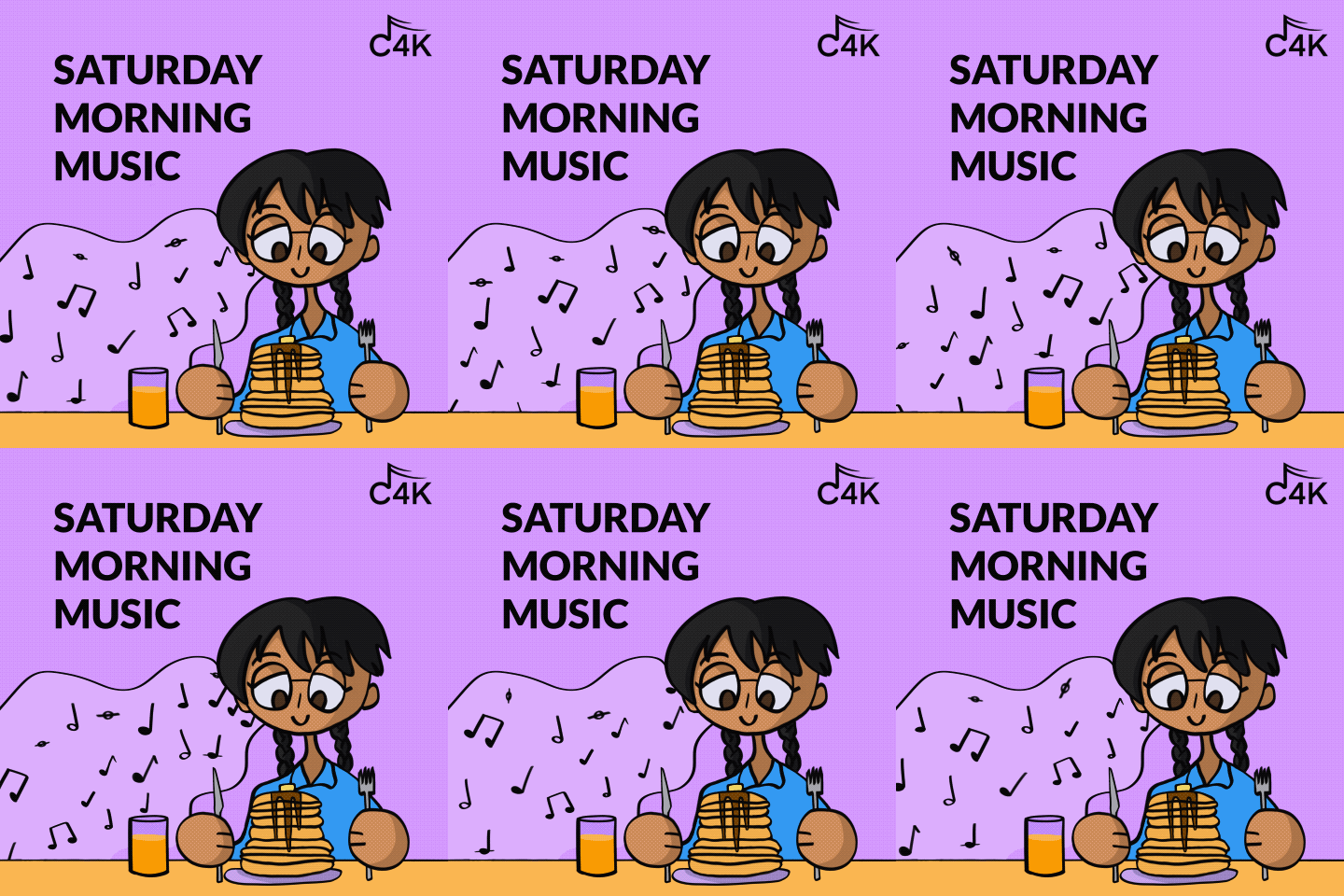
The first sounds your child hears in the morning shape the emotional tone of the hours that follow. Instead of waking up to the jolt of an alarm or the pull of a screen, imagine a gentle piano piece already playing as your child opens their eyes. Something unhurried and peaceful.
The result is that you begin giving your child's nervous system a calm starting point. Research on emotional regulation in early childhood consistently shows that children who begin their day in a low-stress environment are better equipped to handle the inevitable frustrations that come with growing up (Denham et al., 2012). Our Saturday Morning Music playlist offers a curated selection of pieces that reinforce a calm environment… while you handle breakfast and shoes and the myriad of small negotiations of getting out the door.
Playtime: The Invisible Companion
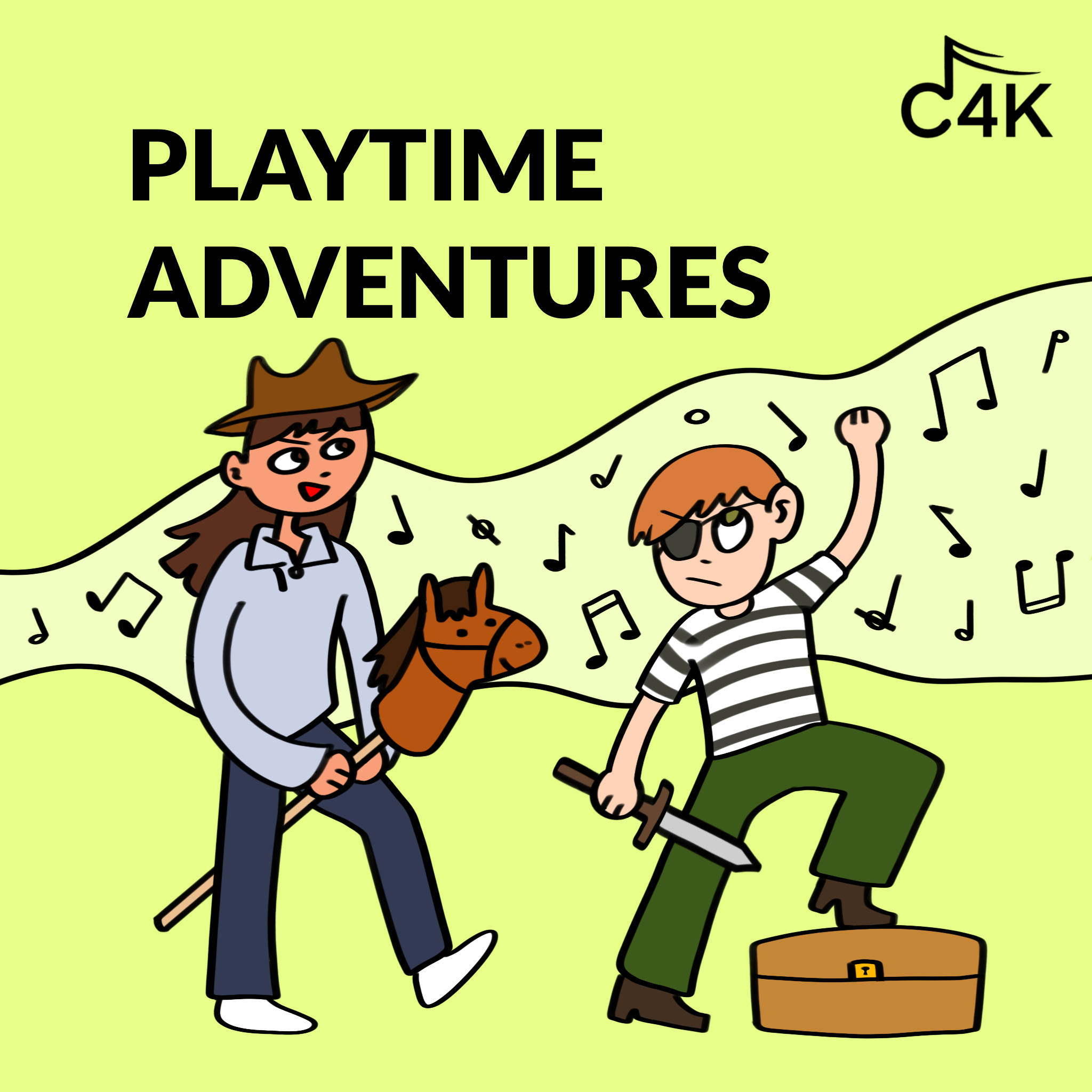
There is a common misconception that playtime can be frivolous or a distraction from learning. In reality, American educational philosopher John Dewey describes play as being a mental attitude rather than mere amusement and argues that the idea of play and work being opposites is false. Play is functional and key for developing open mindedness and curiosity.
This is where the distinction between instrumental music and music with words matters. Songs with words compete for the same cognitive resources your child uses during imaginative play and language development. Imagine trying to make up your own stories and adventures while having to also listen to lyrics about a completely different situation!
A study from the Netherlands found that participants who listened to music without lyrics while performing creating tasks showed significantly higher creative thinking than those who worked in silence (Ritter & Ferguson, 2017). Instrumental music (classical, jazz, folk, etc.) occupies a different channel entirely. It enriches the environment without fragmenting attention and is an excellent balance between music with lyrics and silence. For young children deep in the worlds of building, drawing, or pretending, that kind of creative support is invaluable.
Transitions: The Gentle Signal
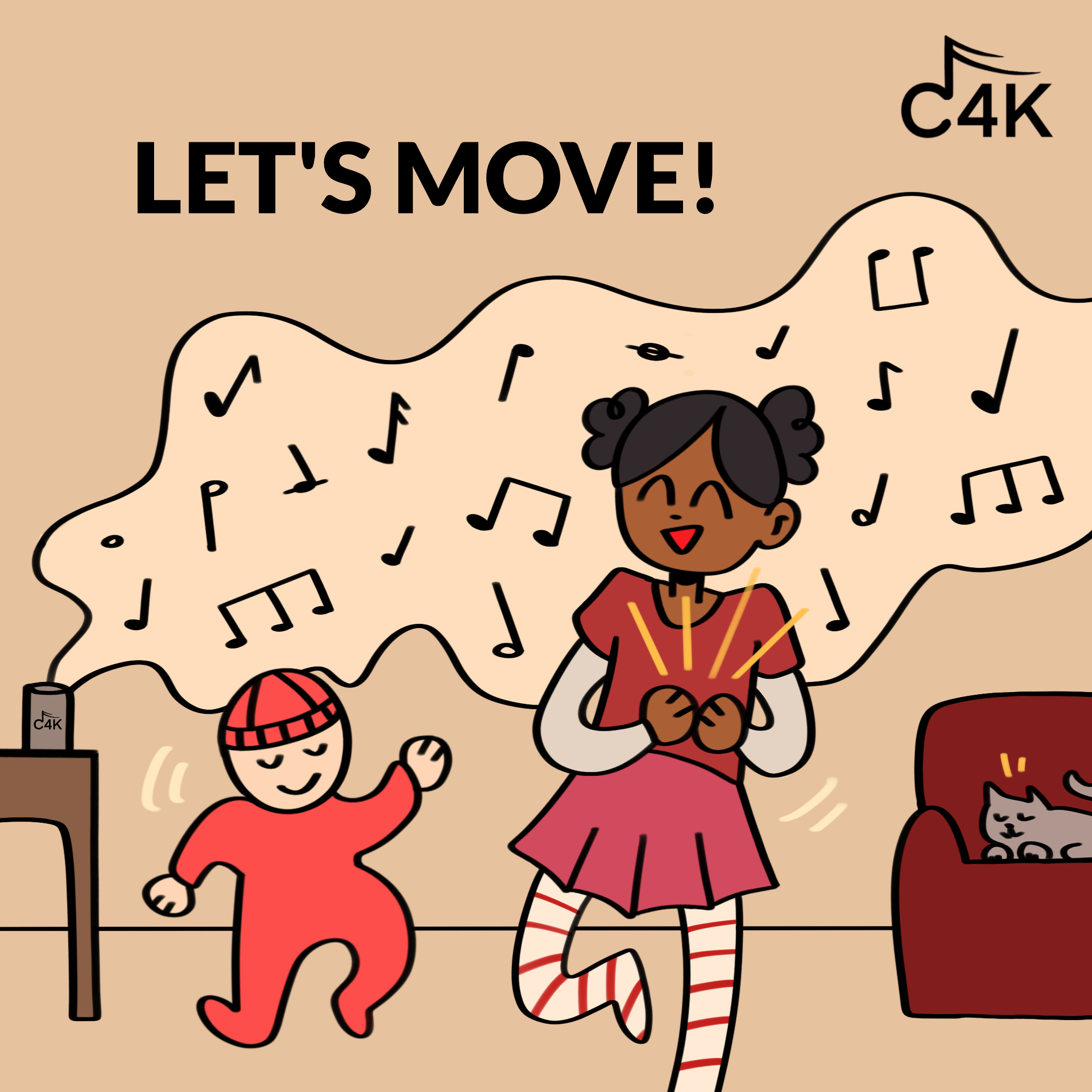
If you have ever tried to move a toddler from one activity to the next, you know that transitions are where the day can unravel. Cleanup time, getting dressed, leaving the house, shifting from play to mealtime: these moments ask children to stop doing something they enjoy and start doing something they may not. Thus can be difficult for a parent.
Making music part of your daily routine can change this. By providing children with auditory checkpoints, specific musical pieces can become the consistent cue for a specific transition, replacing the friction of a verbal command with something children actually want to hear. Early childhood research supports this: consistent auditory cues help children anticipate what comes next, reducing anxiety and resistance (Hemmeter et al., 2012). The 75% reduction in classroom transition times that researchers observed reflects the predictability principle at work. Your child hears the music and thinks, without even realizing it: Oh, I know this part. This is when we clean up. This is when we get ready.
Over time, you will find that the music itself does the asking, and you can happily step back from the role of constant narrator.

Naptime and Quiet Time: The Science of Slowing Down
This may be the single most researched application of music in early childhood. Many researchers often cite Dr. Tiffany Field's 1999 study at the University of Miami, which found that toddlers who listened to classical guitar music at the start of naptime fell asleep 35% faster than on days without music. Preschoolers fell asleep 19% faster. The teachers loved the results. A follow-up study found that children who listened to background music at naptime and bedtime for three consecutive weeks showed significant improvements in overall sleep quality (Tan, 2004).
It’s simple. Slow instrumental music mirrors the tempo your child's body needs to reach in order to fall asleep. It lowers the heart rate, deepens breathing, and creates a consistent auditory environment that signals rest. If your child currently struggles with naptime or bedtime, this single change of streaming a calm playlist may be the easiest and most effective adjustment you ever make.
Bedtime Wind-Down: The Last Sound of the Day
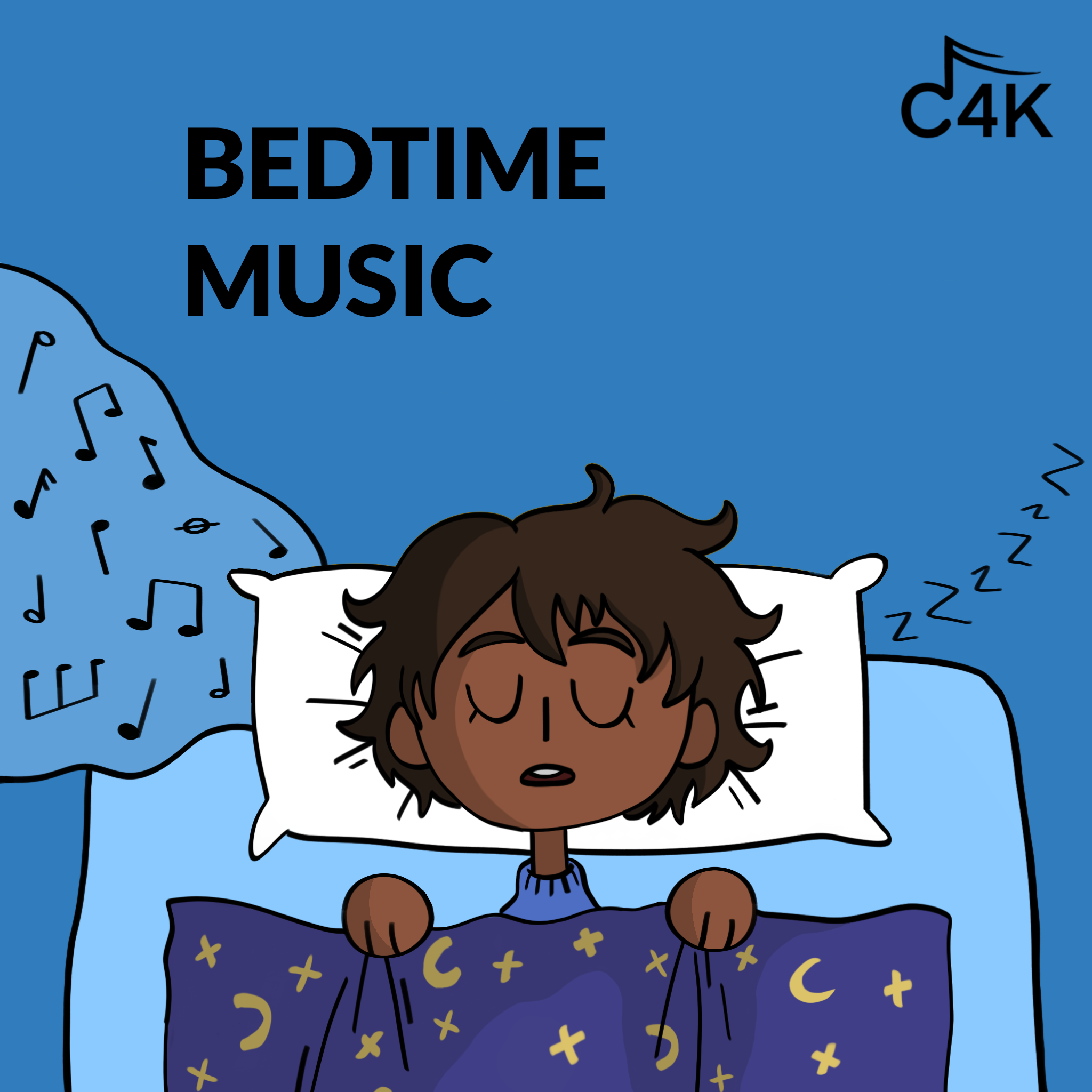
The day has caught up with everyone, and now it’s bedtime, when a listening routine matters most! Not just because it helps children fall asleep, but because it closes the day with something familiar.
I think of this as the bookend to your morning playlist. Where the morning music says "the day is beginning, gently," the evening music says "the day is ending, and everything is okay." For families with children ages birth to 6, this is often the moment when a listening routine feels most natural and most immediately rewarding. The room is dim. The energy is low. A quiet cello suite or a slow orchestral piece can hold that space in a way that nothing else quite can.
Research on parent-child musical interactions suggests that these shared listening moments do something important for the relationship. A 2025 study found that caregiver-infant musical interactions were positively associated with the quality of attachment between parent and child (Dou & Cirelli, 2025).
As we can see, music not only helps your child wind down, but also helps build your relationship at the same time.
You Don't Need to Be a Musician
I hear this concern from parents more than almost anything else and I would like to directly address this: you do not need to know a single thing about classical music to give your child a listening life.
You do not need to know who composed the piece that is playing. You do not need to be able to name the instrument. You do not need to have any musical background at all. That is exactly why I created Classical for Kids. Every playlist is already curated for the moments I have described above. The work of choosing the right tempo, the right energy, the right emotional tone for each part of the day has already been done.
What matters is simply the act of listening together. According to research at the University of Washington, the benefits of music are strongest when music is part of a shared, interactive experience between caregiver and child (Zhao & Kuhl, 2016).
Research also shows that this practice is good for you, too! A survey of more than 2,000 parents with children under age three found that parents who sang or listened to music with their children daily reported fewer symptoms of depression than those who did not (Custodero et al., 2003). During the COVID-19 pandemic, families who increased their musical engagement at home reported stronger parent-child attachment and better parental wellbeing (Steinberg et al., 2021). All the research points in the same direction: music in the home is good for your child's development, and it is also an act of care for your whole family.
Start with One Moment
If you have read this far and feel inspired to overhaul your entire daily routine, I would gently suggest: don't. Start with one moment. Just one.
Maybe it is naptime, because the research is so clear and the payoff is so immediate. Maybe it is the morning, because you want to change the energy your family wakes up to. Maybe it is the transition from playtime to dinner, because that is the moment when everything falls apart in your house and you are willing to try anything.
Whatever you choose, make it the same time each day, and make it easy. Open Classical for Kids. Pick a playlist. Press play.
That is the whole routine. There is no wrong way to do it, no optimal listening posture, no required duration. Just music in the room, your child in the room, and the steady accumulation of something good.
I believe that every child deserves a beautiful soundtrack to grow up with. Not because it will make them smarter or give them an advantage, though the research suggests it helps with both. But because music is one of the oldest, simplest, most generous things human beings have ever created. And your child's ears are ready for it right now.
Just press play.
Research Sources
Selman, S. B., & Dilworth-Bart, J. E. (2024). Routines and child development: A systematic review. Journal of Family Theory & Review, 16(2), 272–328. https://doi.org/10.1111/jftr.12549.
Trehub, S.E. (1987). Infants’ perception of musical patterns. Perception & Psychophysics 41, 635–641. https://doi.org/10.3758/BF03210495.
Trehub, S. E. (1999). Human Processing Predispositions and Musical Universals. In N. L. Wallin, B. Merker, & S. Brown (Eds.), The Origins of Music. MIT Press. https://doi.org/10.7551/mitpress/5190.001.0001.
Denham, S. A., Bassett, H. H., & Zinsser, K. (2012). Early childhood teachers as socializers of young children's emotional competence. Early Childhood Education Journal, 40(3), 137–143. https://doi.org/10.1007/s10643-012-0504-2.
Dewey, J. (1990). The School and Society; and The Child and the Curriculum. University of Chicago Press. https://doi.org/10.7208/chicago/9780226112114.001.0001.
Ritter S.M., & Ferguson S. (2017). Happy creativity: Listening to happy music facilitates divergent thinking. PLoS ONE 12(9): e0182210. https://doi.org/10.1371/journal.pone.0182210.
Hemmeter, M. L., Ostrosky, M. M., & Corso, R. M. (2012). Preventing and addressing challenging behavior: Common questions and practical strategies. Young Exceptional Children, 15(2), 32–46. https://doi.org/10.1177/1096250611427350.
Field, T. (1999). Music Enhances Sleep in Preschool Children. Early Child Development and Care, 150(1), 65–68. https://doi.org/10.1080/0300443991500106.
Tan, L. P. (2004). The effects of background music on quality of sleep in elementary school children. Journal of Music Therapy, 41(2), 128–150. https://doi.org/10.1093/jmt/41.2.128.
Dou, A., & Cirelli, L.K. (2025), The Active Infant's Developing Role in Musical Interactions: Insights From an Online Parent Questionnaire. Infancy, 30: e12648. https://doi.org/10.1111/infa.12648.
Zhao, T. C., & Kuhl, P. K. (2016). Musical intervention enhances infants' neural processing of temporal structure in music and speech. Proceedings of the National Academy of Sciences. 5212–5217. https://doi.org/10.1073/pnas.1603984113.
Steinberg, S., Liu, T., & Lense, M. D. (2021). Musical Engagement and Parent-Child Attachment in Families With Young Children During the Covid-19 Pandemic. Frontiers in psychology, 12, 641733. https://doi.org/10.3389/fpsyg.2021.641733.
Custodero, L.A., Britto, P.R., & Brooks-Gunn, J. (2003). Musical lives: A collective portrait of American parents and their young children. Journal of Applied Developmental Psychology, 24, 553-572. https://doi.org/10.1016/j.appdev.2003.08.005.